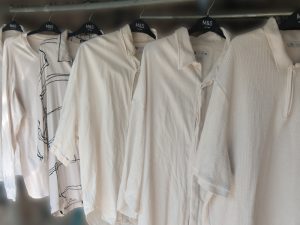

Professional Treatment Whitens Yellowed Clothes
-
Shella laundry
- February 8, 2025

🧼 Why White Clothes Turn Yellow
Yellowed clothes—especially whites—is a common laundry problem, and it’s often more than just age or wear, especially around the neck and underarms. Let’s discuss the main causes of this annoying discoloration and how it affects fabrics:
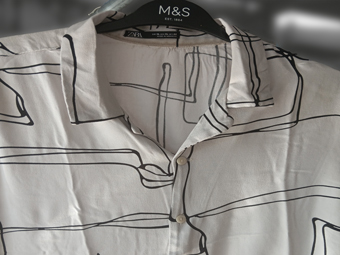
Understanding the Causes of Yellowed Clothes
Yellowed Clothes! Several factors can cause fabric or clothing fibers to yellow, reducing the fabric’s brightness.
- Fabric Aging
- Improper Washing Techniques
- Chemical Exposure.
The Most Effective Type of Detergent When it comes to whitens yellowed clothes, choosing the right detergent is crucial.
Bezact detergent is known for its oxygen bleaching properties, which are safe for all fabric types. Its powerful formula can effectively remove stubborn stains and yellowing, leaving your clothes looking fresh and clean. Alternatively, you can also choose a detergent specifically formulated to whiten or brighten clothes.
Your white clothes can stay bright and fresh for longer. Just make sure you use premium detergent and wash them properly!
Shella Laundry Express Surabaya
🟡 Common Causes of Yellowed Clothes
Yellowing clothes can be very disappointing, especially if they were previously fresh and shiny. This phenomenon is not only an aesthetic issue, but can also indicate potential damage to the fabric. Understanding the causes of yellowing can help you take the right steps to prevent it and restore your clothes to their best condition. This article discusses the various factors that cause yellowing, providing a detailed guide to help you maintain the color and quality of your clothes.
-
- Sweat & Body Oils
- Deodorants & Antiperspirants
- Overuse or Misuse of Bleach
- Hard Water & Iron Content
- Detergent Residue
- Oxidation & Air Exposure
- Heat Damage
- More
The following article doesn’t address how clothes turn yellow. By following proper washing and rinsing techniques, using fabric brightener, avoiding hard water, protecting clothes from sunlight, choosing the right detergent, and storing clothes properly, you can maintain the color and quality of your clothes. With these insights and practical tips, you can ensure your clothes stay bright and shiny, even after repeated washing and wearing.
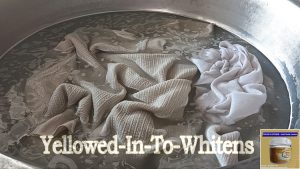
🧼 Top Tips to Revive Yellowed Clothes
Oxygen bleach, not chlorine, for bleaching. Rinse thoroughly and consider a high-acid rinse (such as vinegar) to neutralize residue.
Whitens yellowed stains, consider pre-soaking them. Mix water with oxygen bleach or an alternative, such as BeZact Detergent. Soak your clothes for about 30 minutes before washing. You’ll be amazed at how vibrant your clothes’ colors become!
Choose a detergent that has a high-quality formulation, is effective in reaction, and uses the right application technique
Shella Laundry Express Surabaya
Recommended soaking duration and water temperature
Best results when whitening yellowed clothes, it’s important to soak them for a sufficient amount of time. BeZact detergent is safe enough to soak overnight.
Regarding water temperature, using warm water can help the detergent work more effectively to remove stains and yellowing. However, be careful about using hot water, as it can damage delicate fabrics.
🌡️ Effect of Water Temperature on Oxygen Bleach
What is the effect of water temperature Water temperature plays a critical role in how effectively oxygen bleach works. Here’s how it affects performance:
✅ Warm Water (40–60°C / 104–140°F)
-
- Most effective range for activating oxygen bleach. Helps release oxygen bubbles that lift stains and brighten fabric.
- Ideal for soaking whites, removing yellowing, and treating tough stains.
💧 Cold Water (<30°C / <86°F)
-
- Slower activation of the bleaching agent.
- May be less effective on deep stains or heavy discoloration. Suitable for delicate fabrics that can’t tolerate heat.
🔥 Hot Water (>60°C / >140°F)
-
- Can over-activate the bleach, reducing its effectiveness too quickly.
- May damage delicate fabrics or cause shrinkage. Use with caution—check garment care labels first.
⏱️ Soaking Duration Whitens Yellowed clothes
Soaking times also vary depending on the severity of the yellowing and the type of fabric. Here are some general guidelines:
- Mild Yellowing: For mild yellowing, soaking for 30 minutes to 1 hour in cold or warm water is usually sufficient.
- Moderate Yellowing: For moderate yellowing, soaking for 1 to 2 hours in warm water is recommended. Adding a bleaching agent, such as sodium carbonate or sodium percarbonate, may improve results.
- Severe Yellowing: For severe yellowing, soaking for 2 to 4 hours in hot water may be necessary. This longer soaking time allows the solution to penetrate deeper into the fabric, breaking down stubborn residue.
🧪 Whitening Boosters to Add
Hydrogen peroxide – H₂O₂ is the simplest peroxide and is widely used as an oxidizer, bleaching agent, and disinfectant.
Most people may not be familiar with Hydrogen peroxide (H₂O₂), a clear, colorless liquid, known for its strong oxidizing properties. It Has properties as Follow:
🧪 Chemical Properties
-
- Formula: H₂O₂
- Appearance: Clear, colorless liquid
- Odor: Slightly sharp or medicinal
- Concentration: Commonly available in 35%, 50%, and 60% (food-grade) solutions
- Reactivity: Decomposes into water and oxygen, especially in light or heat
- pH: Slightly acidic (around 4.5–5.5)
PT. Peroksida Indonesia Pratama has produced three liquid chemical products with content percentages of 35%, 50%, and 60%.
Datasheet link:
🧪 What Is Oxygen Bleach?
Oxygen bleach is a gentle, non-toxic alternative to chlorine bleach that’s ideal for brightening whites and removing stains—especially from delicate fabrics like those used in wedding dresses.
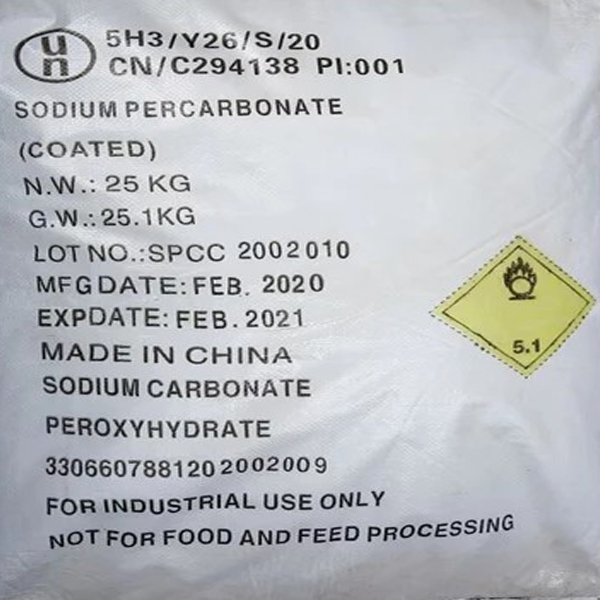
Oxygen bleach, commonly known as “OXI Bleach,” may not be widely known. In chemical engineering terms, OXI Bleach has the formula Na2CO3·3H2O2. This bleach is a mixture of sodium carbonate (Na2CO3) and hydrogen peroxide (H2O2) in a 1:3 molar ratio and is a white crystalline solid.
Sodium carbonate (Na₂CO₃), commonly known as washing soda or soda ash, It has the following properties:
🧪 Basic Properties
-
- Chemical formula: Na₂CO₃
- Molar mass: 105.99 g/mol (anhydrous)
- Appearance: White, odorless powder or crystals
- Solubility: Highly soluble in water
- pH: Alkaline (basic), typically around 11 in solution
Sodium percarbonate (Na₂CO₃·1.5H₂O₂) also known Oxi Bleach is a powerful cleaning agent often used in eco-friendly laundry products and stain removers. It’s a compound of sodium carbonate (washing soda) and hydrogen peroxide, making it a solid form of oxygen bleach
It has been distributed in the market in two forms, Sodium Percarbonate Coat and Un-Coat. which has properties as follow:
🧪 Chemical Profile
-
- Formula: Na₂CO₃·1.5H₂O₂
- Appearance: White, granular powder
- Solubility: Dissolves in water, releasing hydrogen peroxide and sodium carbonate
- pH: Alkaline (around 10–11 in solution)
UV light can be a very effective ally in restoring the brightness of yellowed clothing—especially whites and natural fabrics. Some processes include photobleaching, enhanced oxidation, enzyme activation, and eco-bleaching.
Photobleaching is a process in which UV light, combined with optical brighteners and polymers, restores the yellowed color.
Shella Laundry Express Surabaya
The Power of UV Light: How It Can Whitens Yellowed Clothes
Ultraviolet (UV) light is a form of electromagnetic radiation with a wavelength shorter than visible light but longer than X-rays. It is part of the broader solar spectrum and is divided into three categories: UVA, UVB, and UVC. UVC is most effective at killing bacteria and viruses.
Some of the process Methods seem unusual, It would be better to understand, Here are the Process Methods:
🌞 How UV Light Whitens Yellowed Clothes
- Photobleaching Effect
- UV rays trigger a photochemical reaction that breaks down yellowed organic compounds in fabric.
- This process is similar to how sunlight fades colors—but in this case, it helps remove discoloration.
- Oxidation Boost
- UV exposure enhances the action of oxygen and moisture, promoting natural bleaching. Works especially well when combined with oxygen-based detergents or peroxide treatments.
- Enzyme Activation
- Some advanced detergents contain photo-activated enzymes that respond to UV light, increasing stain breakdown efficiency.
- Eco-Friendly
- Whitening No harsh chemicals needed—just sunlight and time.
- Ideal for delicate fabrics that can’t tolerate aggressive bleach.
🧼 Performance Highlights Superior stain removal compared to leading brands.
Effective across a range of fabric types and washing conditions. Likely designed to be gentle on colors while tough on grime. This kind of formulation suggests a detergent that’s not just reactive but intelligently adaptive—ideal for modern laundry needs. If you’re curious, I can help you compare it with other top-tier detergents or explore the science behind enzyme synergy and optical brighteners. Want to dive deeper?
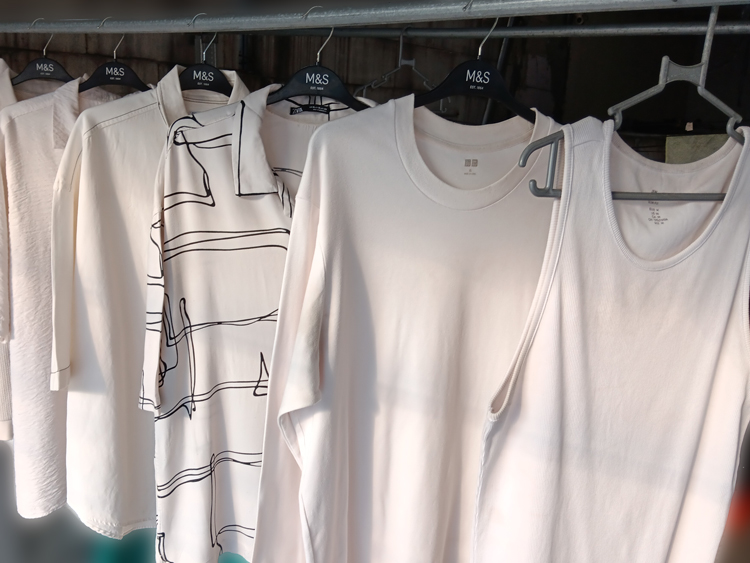
A T-Shirt had started to yellow despite careful care.,The cleaner used a combination of enzyme cleaners and ultrasonic cleaning to restore the dress to its original whiteness
Shella Laundry Express Surabaya
Specialty Cleaning Chemicals
Professional cleaners like shella laundry often use a variety of cleaning agents designed to address yellowing. These include:
- Oxygen Bleach – Bezact Detergent: This is a powerful yet gentle cleaner that breaks down stains and restores color without harsh chemicals. This product is especially effective on natural fabrics.
- Enzyme Cleaner – Bezact Detergent: This product contains enzymes that break down organic stains and can help restore whiteness to fabrics. This product is often used for delicate materials like silk and wool.
- Bleaching Agent: This product is formulated to brighten fabrics and is especially effective on synthetic materials.
🌡️ Temperature Effects
- Bleaching was tested at 40°C, 50°C, and 60°C using TAED/H₂O₂ and enzyme-assisted systems.
- 60°C was found to be the optimal temperature for achieving the highest Whiteness Index (WI).
- 40°C: Lowest WI, insufficient bleaching.
- 50°C: Better than 40°C, but still suboptimal.
- 60°C: Maximum WI achieved.
🧬 Enzyme Influence
Enzymes used: lipase, protease, cellulase, pectinase (at pH 7.5). Enzyme addition to low-temp bleaching improved WI. At 60°C, the WI ranking was: Code lipase < protease < pectinase < cellulase Cellulase was the most effective in enhancing whiteness.
⚖️ Comparison
The TAED/H₂O₂ system alone had lower WI than commercial peroxide bleaching. Enzyme-assisted systems helped bridge that gap, especially at optimal temperature.
Source Bio-Bleaching of Cotton/Polyamide Fabric with Different Enzyme System at Low Temperature: Bio-Bleaching.pdf
🧪 Key Technologies in OXI HUNT & BeZact Detergent
| Component | Functionality |
|---|---|
| Stain Buster | Targets and removes tough stains like oil, blood, and grass effectively. |
| Long Alkyl Chain | These hydrophobic molecules penetrate oily stains, emulsifying grease and grime for easy removal. |
| Bright Optic | Optical brighteners reflect blue light, making fabrics appear whiter and more vibrant—especially useful for aging or dull textiles |
| Enzymes | Nature’s stain fighters. Proteases, amylases, and lipases break down proteins, starches, and fats at the molecular level, targeting stains like blood, sweat, and food. |
| Activators | Boost the effectiveness of bleaching agents (like hydrogen peroxide) at lower temperatures, reducing energy consumption. |
| Polymers | These help prevent dirt from re-depositing on fabrics during washing and can enhance softness or reduce static. |
this really captures the transformation of detergents from basic cleaners to sophisticated fabric-care solutions. Let’s unpack the science and innovation behind this evolution a bit more
Shella Laundry Express Surabaya
As we look ahead, expect smart detergents—formulations that adapt to fabric type, stain profile, and even water hardness. Some may even integrate nanotechnology or AI-driven customization for precision cleaning.
Conclusion Treatment Whitens Yellowed Clothes
🌍 Sustainability Meets Performance
-
Lower temperature efficacy: Thanks to activators and enzymes, modern detergents clean effectively in cold water, saving energy.
-
Biodegradable ingredients: Many formulations now prioritize eco-friendly surfactants and enzymes.
-
Concentrated formats: Less packaging, reduced transport emissions, and lower water usage.